
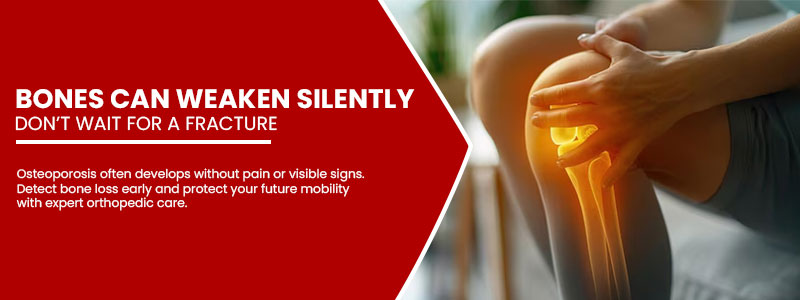
How Bones Weaken Without Fractures: Awareness & Symptoms
Silent Osteoporosis: Bone Loss Without Symptoms – Best Orthopedic Doctor in Varanasi
Consult the best orthopedic doctor in Varanasi at Orthomax Hospital for expert insights on osteoporosis. This condition is often associated with broken bones, hospital visits, and long recovery periods. However, bone loss rarely begins with a fracture. In many individuals, bones gradually weaken over time without causing pain, discomfort, or visible physical changes. This silent progression is what makes osteoporosis difficult to recognise in its early stages.
Bone density can decline quietly while a person continues to walk, work, and stay active. Understanding how osteoporosis can exist without fractures helps shift attention toward early awareness rather than late diagnosis.
Osteoporosis as the Silent Bone Disease
Osteoporosis earns the label “silent bone disease” because the internal process of bone breakdown often remains unnoticed for years. Bone is a living tissue that is constantly renewed, but in osteoporosis, bone resorption gradually exceeds bone formation. This imbalance weakens the internal bone structure long before any external changes occur.
Unlike conditions that cause early inflammation or pain, osteoporosis alters bone microarchitecture at a microscopic level. These internal changes do not trigger immediate physical signals, which is why daily activities often remain unaffected despite ongoing bone loss. Over time, bones become more fragile, even when the individual feels entirely well.
Bone Loss Begins Long Before Symptoms Appear
Bones are living tissues that constantly undergo renewal. Old bone is broken down and replaced with new bone to maintain strength. Osteoporosis develops when this process becomes imbalanced, and bone breakdown slowly exceeds bone formation.
This gradual loss:
- Occurs over years rather than months
- Does not trigger pain or inflammation
- Does not interfere with routine movement
Because this process is slow and internal, the body does not provide clear warning signals.
Why Fractures Are a Late Indicator
Fractures are often seen as the starting point of osteoporosis, but they are actually a late outcome. By the time a fracture occurs, bone strength has already reduced significantly.
Before fractures develop:
- Bone structure weakens internally
- The outer shape of bones remains unchanged
- Physical strength appears normal
This explains why many people are unaware of their condition until an unexpected injury occurs.
How Osteoporosis Remains Hidden in Daily Life
People with early or moderate bone loss often continue their usual routines without difficulty. This sense of normalcy can create a false sense of reassurance.
Even with reduced bone density:
- Walking and standing feel effortless
- Climbing stairs does not cause strain
Since daily activities remain unaffected, bone health may not become an immediate concern.
Silent Changes Within the Spine
While bone loss affects the entire skeleton, certain areas are impacted earlier than others. The spine is commonly affected during the early stages of osteoporosis, yet changes often occur without pain.
These silent spinal changes may include:
- Mild compression of vertebrae
- Gradual shortening of spinal height
- Subtle posture changes that progress slowly
Because these changes happen over time, they are often mistaken for natural ageing rather than bone weakening.
Pain Is Not a Reliable Measure of Bone Health
A lack of pain does not indicate strong bones. Osteoporosis itself does not cause discomfort.
Pain usually develops only when:
- A fracture occurs
- Vertebral compression affects nearby nerves
- Muscles strain due to posture changes
Relying on pain as a sign of bone health can therefore delay detection.
Bone Loss Can Be Found Incidentally
Many people learn they have osteoporosis during medical evaluations conducted for unrelated reasons. This unexpected discovery is common.
Bone loss is often detected during:
- Imaging tests for back or joint concerns
- Routine health check-ups based on age
- Evaluations for long-term medical conditions
These incidental findings highlight how quietly osteoporosis can progress.
Certain Individuals Are More Likely to Have Silent Bone Loss
Not everyone experiences bone loss in the same way. Some individuals are more prone to developing osteoporosis without noticeable signs.
Factors linked with silent progression include:
- Gradual bone density decline rather than rapid loss
- Smaller skeletal frame
- Long-term use of medications affecting bone metabolism
In these cases, bone weakening may continue unnoticed for years. At Orthomax Hospital, the best orthopedic doctor in Varanasi can help identify these risks early through advanced diagnostics.
Physical Strength Does Not Reflect Bone Strength
Muscle strength and bone density are not the same. A person may feel strong and active while having fragile bones.
This mismatch occurs because:
- Muscles adapt faster than bones
- Cardiovascular fitness remains unaffected
- Bone density loss does not limit endurance
As a result, even physically active individuals may still be at risk.
Why Osteoporosis Is Commonly Missed Without Fractures
Several factors contribute to delayed recognition of osteoporosis in the absence of fractures, including:
- Absence of early symptoms
- Normal movement and balance
- The misconception that osteoporosis only affects older adults
- Lack of routine bone health assessments
Together, these factors allow bone loss to remain unnoticed.
The Importance of Bone Density Evaluation
Bone density testing plays a crucial role in identifying osteoporosis before fractures occur.
These evaluations:
- Measure bone mineral content
- Compare bone strength with age-matched standards
- Detect early skeletal weakening
Testing often reveals bone loss in people who feel completely healthy.
Emotional Reactions to a Silent Diagnosis
Being diagnosed with osteoporosis without experiencing fractures can feel confusing or even dismissible.
Common emotional responses include:
- Doubt about the seriousness of the condition
- Difficulty accepting a diagnosis without symptoms
- Anxiety about future bone health
A clear explanation helps individuals understand that early identification allows for better long-term outcomes.
Living With Osteoporosis Before Injury
When osteoporosis is identified early, most individuals continue normal routines with greater awareness of bone health.
This stage often involves:
- Regular monitoring of bone density
- Ongoing medical guidance
- Adjustments focused on maintaining skeletal strength
Why Early Awareness Matters
Recognising bone loss before fractures occur allows individuals to make informed decisions about their health.
Early awareness helps:
- Reduce the risk of future injuries
- Preserve independence and mobility
- Maintain quality of life over time
Conclusion
Osteoporosis does not always announce itself through pain or broken bones. In many cases, bone loss develops quietly beneath the surface while daily life continues uninterrupted. Understanding this silent phase shifts attention from reacting to fractures toward recognising bone health earlier, when meaningful steps can still be taken at Orthomax Hospital with the best orthopedic doctor in Varanasi.
Frequently Asked Questions
Can osteoporosis exist even if someone has never had a fracture?
Yes, bone density can decline significantly before any fracture occurs.
Is it possible to feel healthy while having osteoporosis?
Yes, many people feel physically well and active despite reduced bone strength.
Are spinal changes always noticeable?
No, many spinal changes occur gradually without pain or discomfort.
How is osteoporosis often discovered without symptoms?
It is frequently identified during scans or tests done for other medical reasons.
Why is early detection important even without symptoms?
Early identification helps reduce the risk of fractures and supports long-term bone health planning.